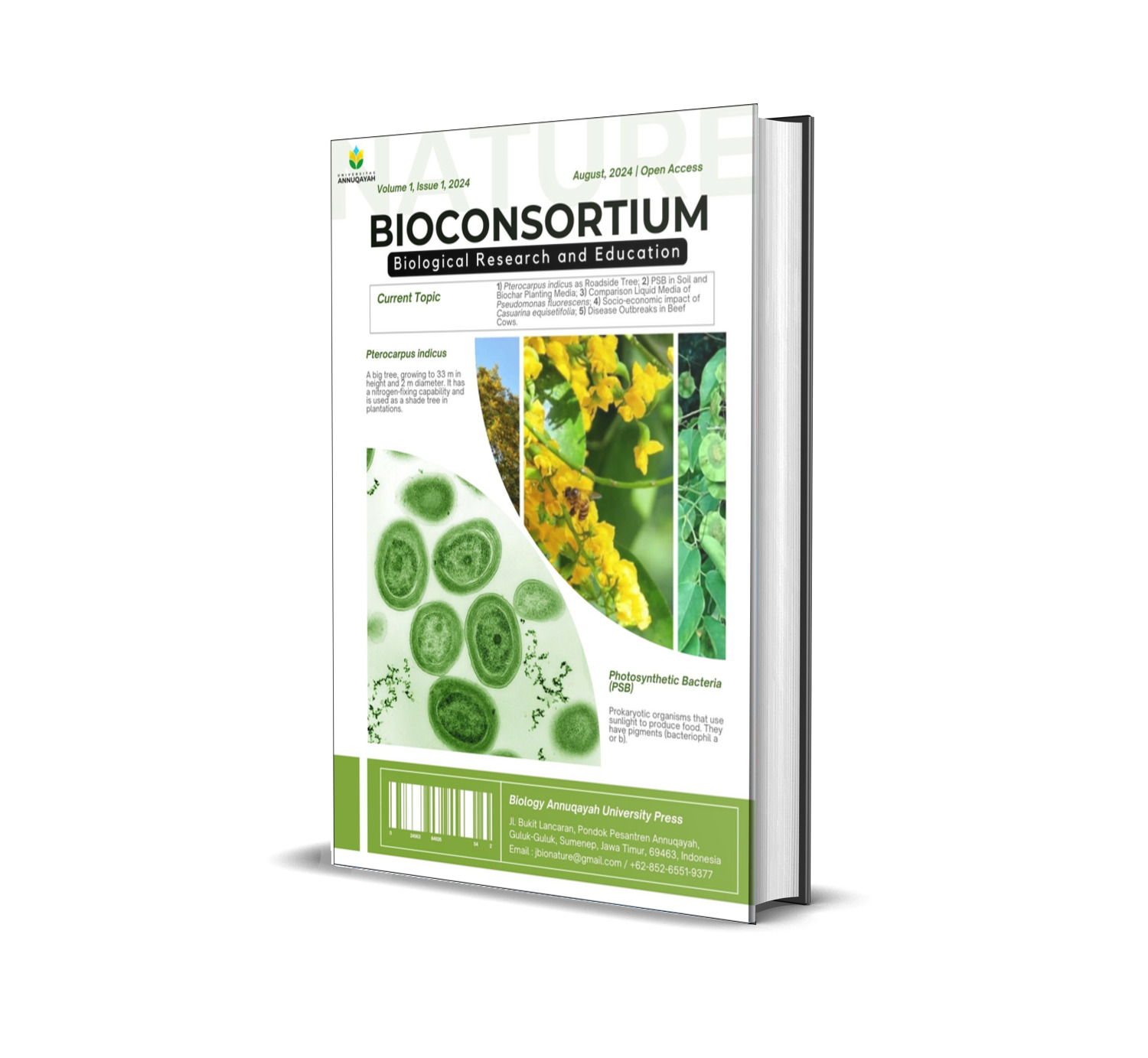
Effectivity of Pterocarpus indicus as Roadside Tree in Arek Lancor Pamekasan Regency
DOI:
https://doi.org/10.59005/bioconsortium.v1i1.298Keywords:
Pterocarpus indicus, Roadside Tree, Arek Lancor, PamekasanAbstract
Pterocarpus indicus is a tree that has high ecological value. It has a significant positive impact on the environment, especially in urban areas. This factor is very important to create the adequate shade on roadside. The wide and dense leaves can filter sunlight well, provide protection from heat scorching and provide coolness to the surrounding environment. The aim of this research is to determine the positive impact of planting Pterocarpus indicus in roadside of Arek Lancor area, Pamekasan and how it contributes to reducing air pollution in the area. This research uses a qualitative descriptive observation method. The results of this research are the Pterocarpus indicus tree has a positive impact, such as can grow in less than optimal soil and air conditions, can improve air quality, protecting soil from erosion, reducing the risk of flooding, providing habitat for birds, insects and small mammals and having aesthetic value. So, the conclution are Pterocarpus indicus tree give the benefit to road users by creating a green and cool environment and it is effectively absorbing pollutants and reducing the concentration of toxic gases such as CO2, NO2 and SO2.
References
Heyne, K. (1987). Tumbuhan Berguna Indonesia. Terjemahan: Badan Litbang Kehutanan Jakarta. Jilid II dan III. Cetakan kesatu. Yayasan Sarana Wana Jaya. Jakarta.
Ingeswari, N. A. (2016). Karakteristik Stomata Daun Angsana (Pterocarpus indicus Will) Berdasarkan Ketinggian Tempat yang Berbeda Sebagi Bahan Ajar Biologi. [Skripsi]. University of Muhammadiyah Malang.
Nusa, A. L. (2016) Uji Aktivitas Antiinflaasi Ekstrak Daun Angsana (Pterocarpus indicus Willd) Terhadap Mencit (Mus musculus). [Skripsi]. Fakultas Kedokteran Dan Ilmu Kesehatan Universitas Islam Negeri Alauddin Makassar.
Satori, D. & Komariah, A. (2011). Metode Penelitian Kualitatif. Alfabeta. Bandung.
Soerianegara, I. & Lemmens, R.H.M.J. (2002). Sumber Daya Nabati Asia Tenggara 5(1): Pohon penghasil kayu perdagangan yang utama. PROSEA – Balai Pustaka. Jakarta
Sugiyono. (2009). Metode Penelitian Kuantitatif Kualitatif dan R & D. Alfabeta. Bandung.