TRANSFORMATION LOMBANG VILLAGE WATERMELON TRANSFORMATION: FROM FRESH FRUIT TO INNOVATIVE ZERO-WASTE BASED ECONOMIC PRODUCTS
LOMBANG VILLAGE WATERMELON TRANSFORMATION: FROM FRESH FRUIT TO INNOVATIVE ZERO-WASTE BASED ECONOMIC PRODUCTS
Keywords:
Desa Lombang, inovasi produk, pemberdayaan masyarakat, ,semangka, Zero WasteAbstract
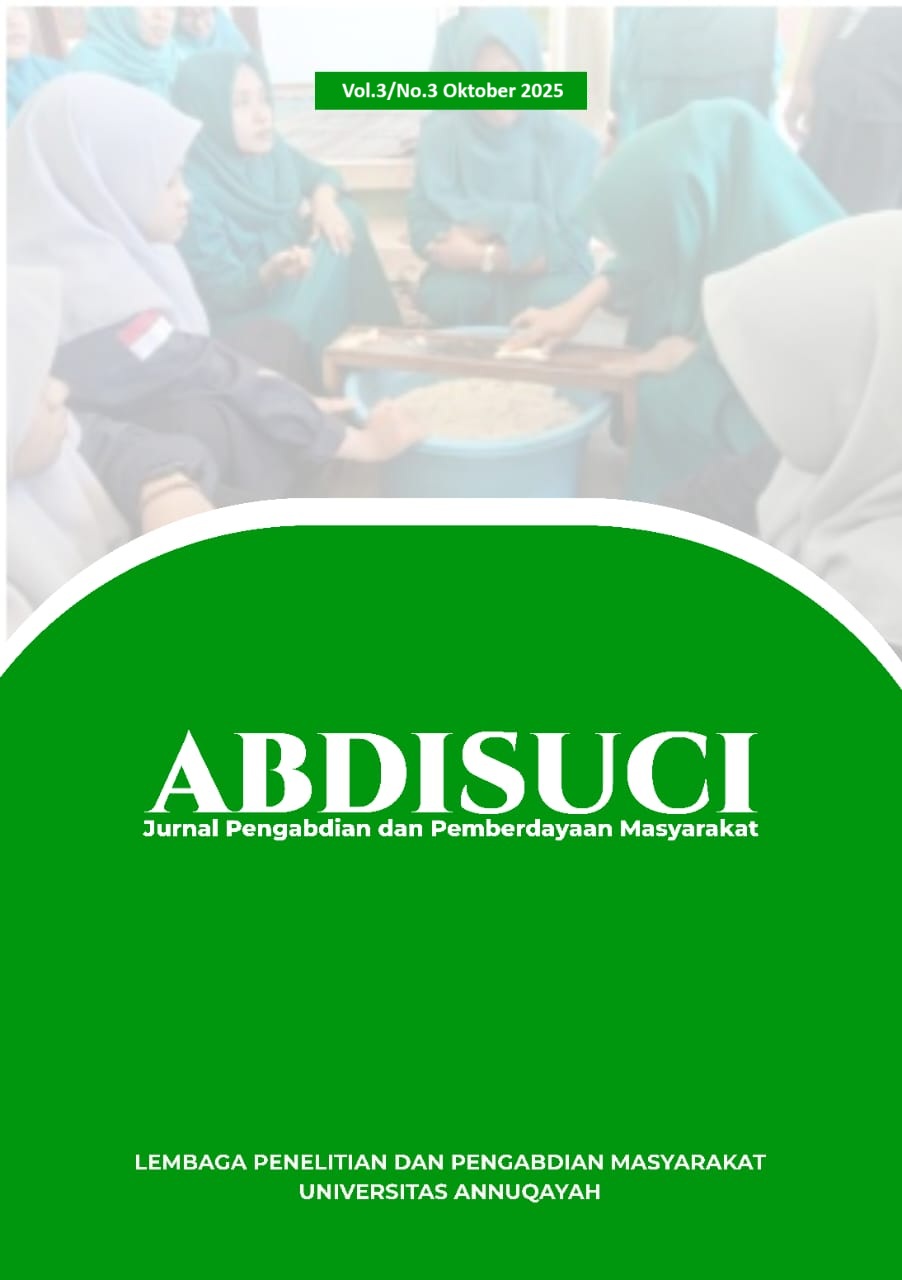
This Community Service Program (KKN) aims to optimize the local potential of Lombang Village through the innovation of processing watermelon into economically valuable products using a Zero Waste approach. Watermelon is one of the village's leading agricultural commodities, yet often the harvest is not optimally absorbed by the market. Therefore, the KKN team from Annuqayah University, Post 15, initiated training and mentoring programs for processing watermelon into various products such as watermelon jam, candied watermelon rind, watermelon rind chips, and liquid organic fertilizer (LOF), by utilizing all parts of the fruit to reduce waste. This activity involved active community participation and aimed to raise awareness about organic waste management and empower family economies. The results showed that the community was very enthusiastic and capable of independently replicating the products. This program is expected to be an initial step towards economic independence based on local potential and environmentally friendly principles. Through mentoring activities for local residents especially mothers as part of the KKN program, followed by processing and production, this initiative also included training programs for the community on processing techniques and effective packaging. As a result, the comprehensive utilization of watermelon not only succeeded in reducing waste but also increased the economic value for the people of Lombang Village.
References
Ir. Sri Haryati dkk, Buku Pedoman Budidaya Semangka, Kementerian Pertanian Jl. Ir.
H. Juanda No. 20, Kota Bogor, 16122, Indonesia, 2022
Kartini Rustan, Andi Agustang, Idham Irwansyah Idrus, Penerapan Gaya Hidup Zero
Waste Sebagai Upaya Penyelamatan Lingkungan Di Indonesia, volume 2 no 6
Amara Alya Nur Cantika , Selly Harnesa Putri, Desi Nurliasari, Pemanfaatan Limbah
Kulit Buah Semangka (Citrullus Lanatus) Sebagai Antioksidan Alami Dalam
Sediaan Masker Wajah Berbentuk Gel, Jurnal DIALEKTIKA: Jurnal Ilmu
Sosial, Vol 21 No. 2 2023,
Abdurrahman, Pendekatan Abcd (Asset-Based Community Development) Dalam
Pengembangan Pendidikan Islam, Jurnal Tinta, Vol. 6 No. 1, Month, March
Year, 2024 Universitas Al-Qolam Malang
Bernadetta Putri Hapsari, Analisis Penerapan Zero Waste Dalam Pengelolaan Sampah
Rumah Tangga Guna Meningkatkan Kualitas Lingkungan Hidup, Jurnal Ilmu
Sosial dan Humaniora Vol. 2 No. 6, 2024
Feni Oktafiyani, Hayati, Tiara Misti Indriani, Pemanfaatan Kulit Semangka Menjadi
Produk Manisan Sebagai Upaya Peningkatan Usaha Mikro Kecil (Umk) Desa
Purwojati, Prosiding Kampelmas Vol. 1 No. 2 Tahun 2022.
Akhmad Jufri, Pengembangan Produk Olahan Berbahan Dasar Semangka Berbasis
Ekonomi Kreatif Di Desa Gapura, Lombok Tengah , Development of Processed
Products Made From Watermelon Based On Creative Economics In Gapura
Village, Central Lombok, Vol. 2 No 4, 2024
Adimas Pamuji, Uji Daya Semangka Hibrida Biji Kuning (Citrulus Vulgaris), Vol. 5
No.4, 2017
Muhammad Zubzir, Upaya Pemanfaatan Limbah Buah Semangka Sebagai Alternatif
Pupuk Organik Untuk Mengurangi Pencemaran Lingkungan Di Desa
Pringgabaya, Vol. 3 No. 4 , 2021
Putu Parmila, Pengaruh Dosis Pupuk Petroganik Dan Kalium Terhadap Pertumbuhan
Dan Hasil Semangka (Citrulus Vulgaris Scard), Vol.2 No.1 2019
Downloads
Published
How to Cite
Issue
Section
License
Copyright (c) 2025 ABDISUCI : Jurnal Pengabdian dan Pemberdayaan MasyarakatLembaga Penlitian dan Pengabdian kepada Masyarakat (LPPM) Universitas Annuqayah